


Situated in the heart of Central Europe, the Federal Republic of Germany is a major global power, a founding member of the European Union, and Europe’s largest economy. Home to over 83 million people, it is structured as a federal parliamentary republic comprising 16 distinct states, with its cultural and political hub centered in the reunited capital of Berlin.
Germany’s landscape transitions beautifully from the low-lying sandy plains of the north, through the dense forests and medieval castle-dotted river valleys of the central uplands—like the famous Rhine and Danube basins—and finally up to the dramatic, snow-capped peaks of the Bavarian Alps in the south.
Historically, the nation has evolved from a fractured collection of Germanic tribes and kingdoms to the influential Holy Roman Empire, followed by a turbulent 20th century marked by the devastation of both World Wars and a decades-long partition during the Cold War. Since its triumphant reunification in 1990, Germany has championed democratic values, human rights, and deep European integration.
Economically, Germany operates on a robust social market model. It is a powerhouse of engineering and high-tech manufacturing, world-renowned for its automotive and chemical industries. While facing contemporary structural shifts—such as transitioning toward renewable energy and managing intense global market competition—the nation remains a core driver of international trade and innovation.
Culturally, Germany has left an indelible mark on the world as the birthplace of legendary composers like Bach and Beethoven, groundbreaking thinkers like Kant and Einstein, and a rich dual-education system that values meticulous craftsmanship. Today, it is a highly diverse, progressive, and forward-looking nation that seamlessly blends a complex historical heritage with modern, cosmopolitan living.
Berlin, Germany’s capital, is a city that pulsates with a unique blend of historical weight and contemporary vibrancy. Its story is etched into its very fabric, from the iconic Brandenburg Gate to the remnants of the Berlin Wall, stark reminders of a divided past.
Today, Berlin is a global hub of culture, art, and innovation. Its diverse population contributes to a dynamic atmosphere, evident in its thriving arts scene, eclectic nightlife, and countless museums and galleries. The city boasts a remarkable number of cultural institutions, offering something for every interest.
Beyond its historical landmarks, Berlin is known for its green spaces, providing a welcome respite from the urban bustle. It’s a city of contrasts, where historical architecture stands alongside modern designs, and where a sense of freedom and creativity permeates the air. Berlin’s resilience and constant evolution make it a truly captivating destination.
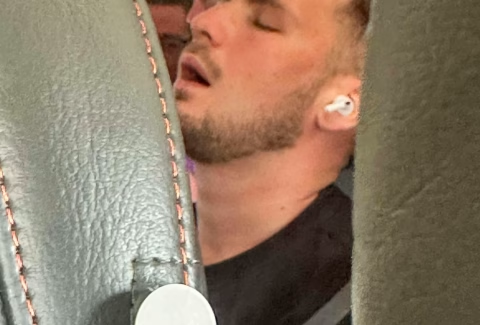
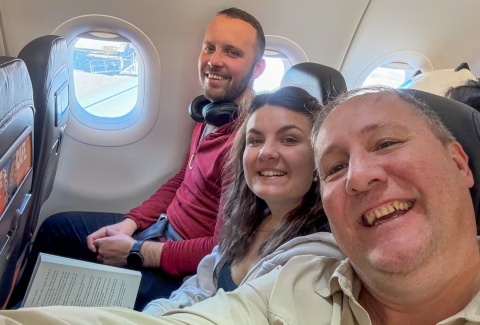
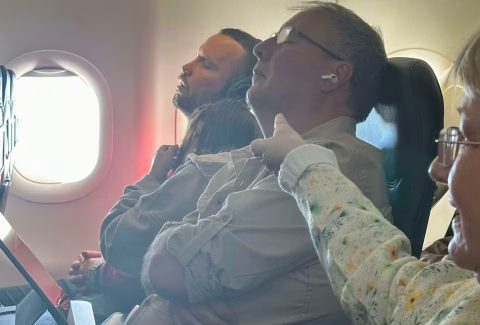
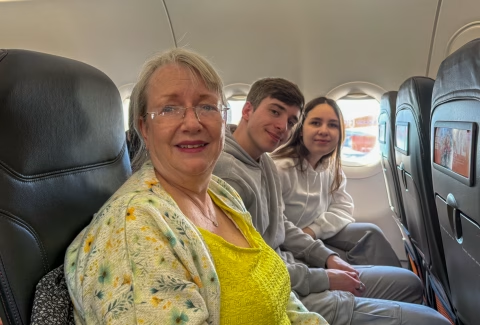
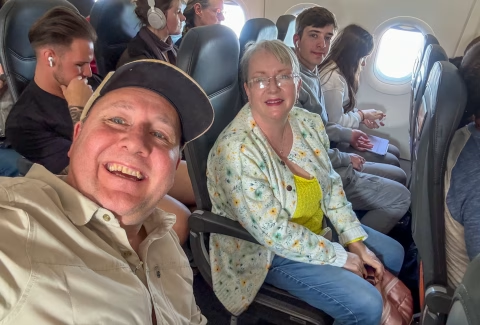
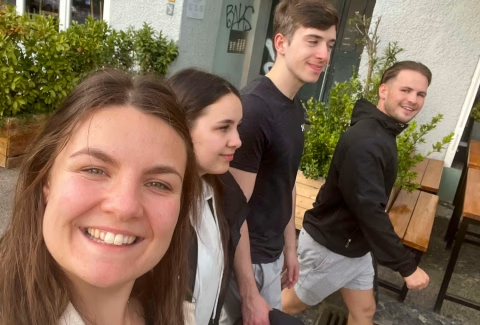
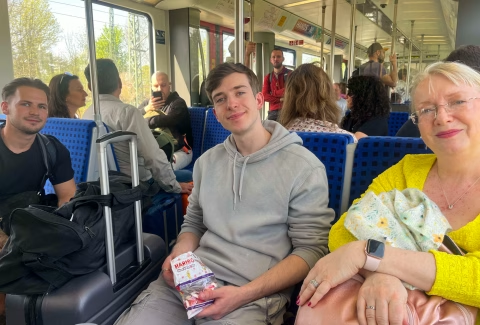
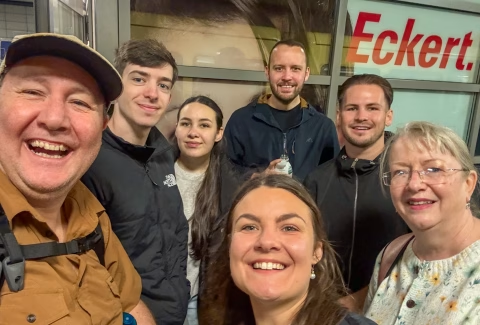
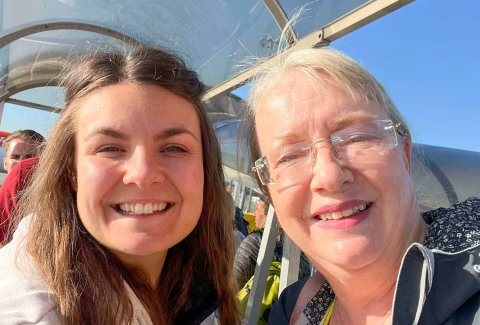
An early morning start kicked off our Berlin adventure, but thankfully, everything went smoothly. The Murt men even managed to catch a few well-needed winks on the plane. After a quick and easy train journey from the airport, we arrived at our apartment—our perfect home base for the next few nights in this incredible city, ready to uncover its deep history.

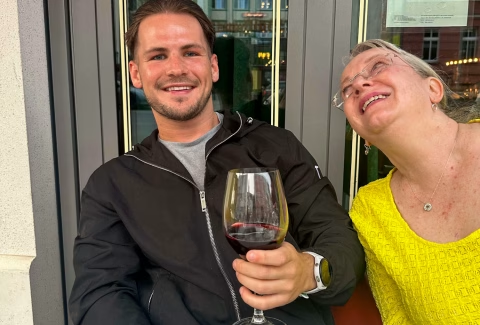
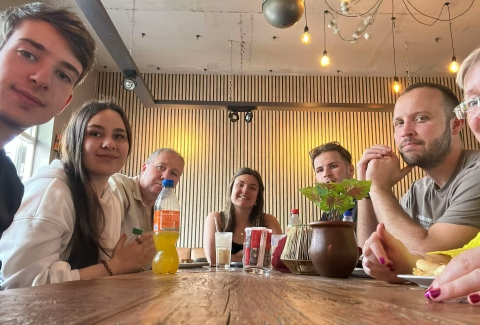

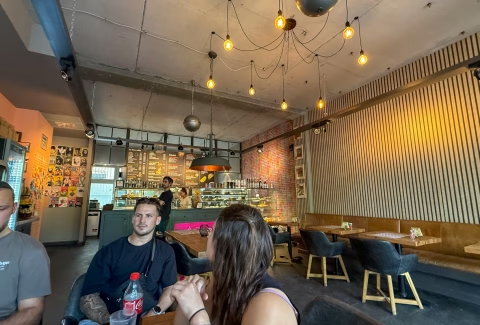
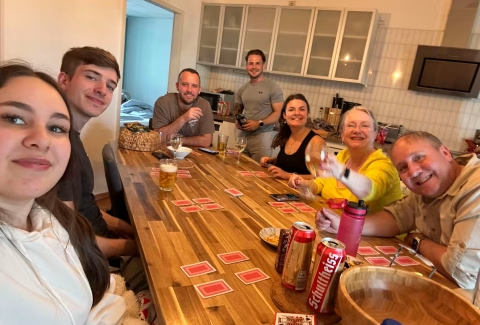
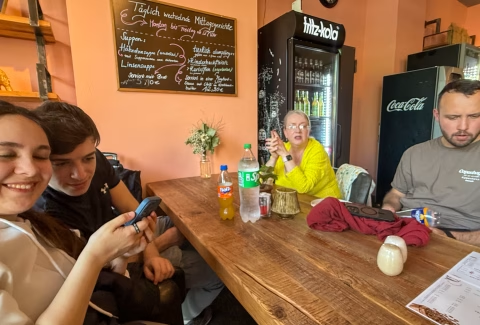
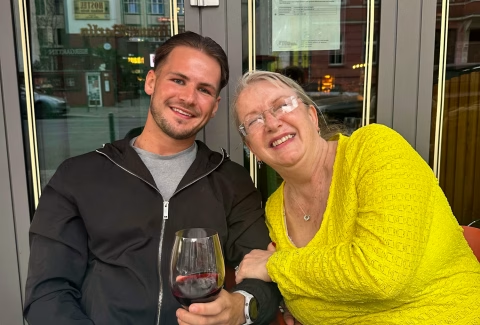
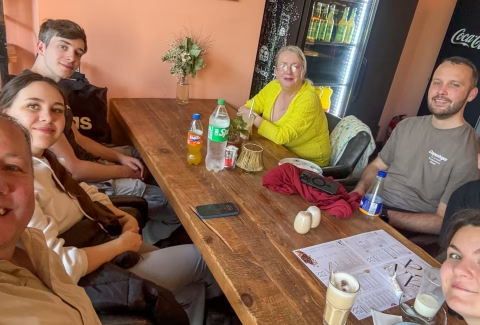
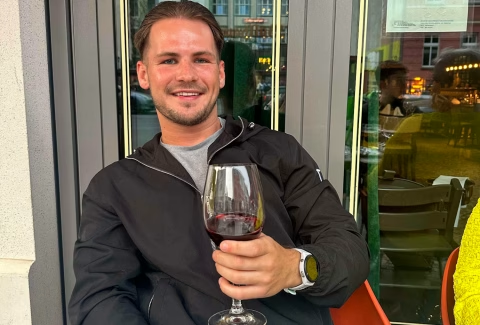
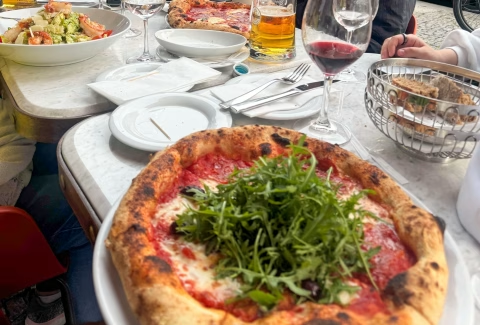
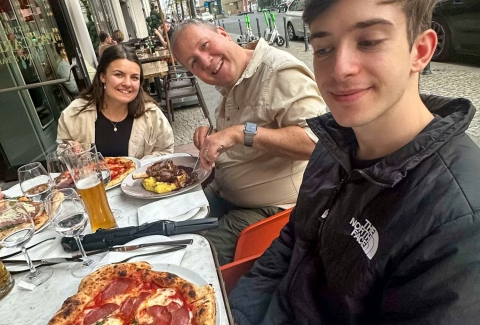
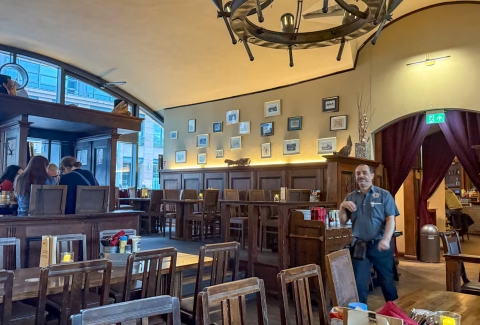
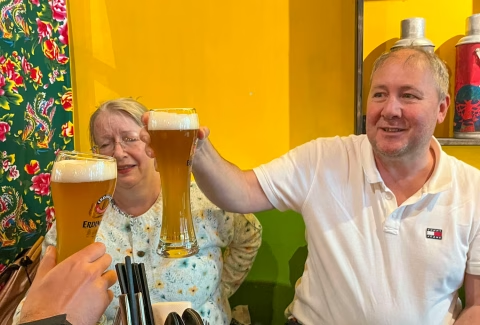
We didn’t waste any time immersing ourselves in the local culture. Our first night began with a scenic stroll to a local neighborhood restaurant for some hearty, traditional German food, paired with a few excellent glasses of wine. The evening didn’t end there; we kept the drinks flowing back at the apartment, diving into a few competitive games that only got funnier after a few bevies.
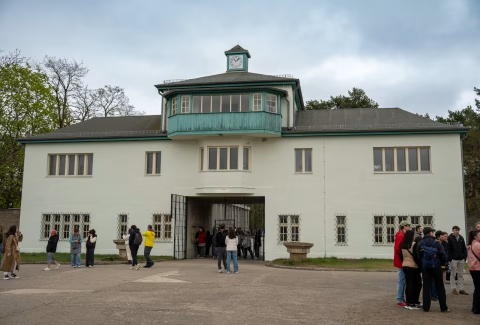
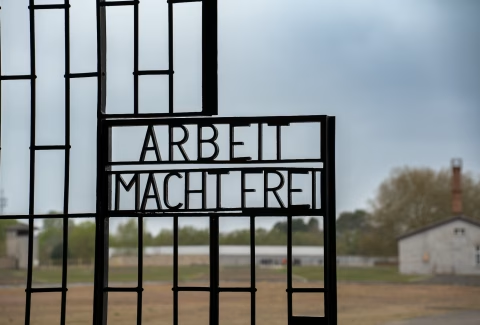
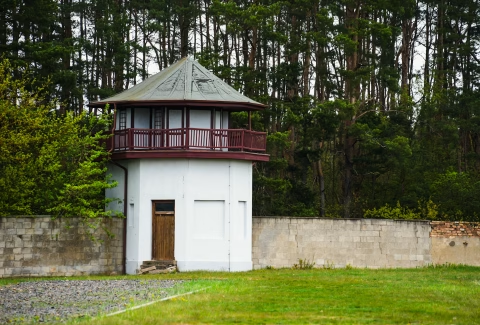
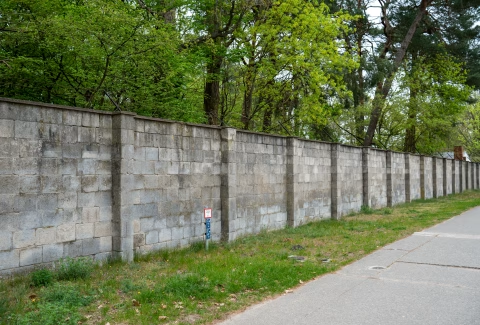
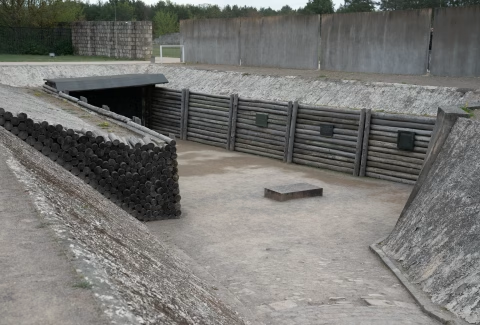
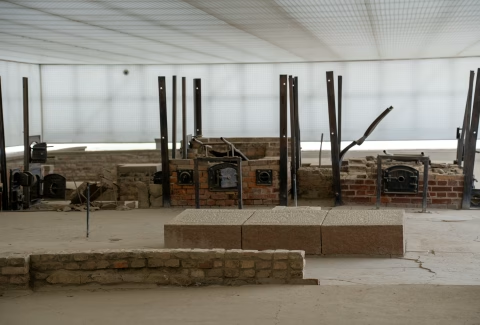
The next day took a more sobering turn with a guided tour of the Sachsenhausen Memorial and Museum. Located just north of Berlin in Oranienburg, Sachsenhausen was established in 1936 as a primary Nazi concentration camp. It held a dark significance as a “model” training ground for the SS, where over 200,000 people were imprisoned and subjected to brutal forced labor, medical experiments, and systematic executions. Later, from 1945 to 1950, it was repurposed as Soviet Special Camp No. 7, holding political prisoners under harrowing conditions.
Walking through the heavy iron gates—still bearing the cynical phrase Arbeit macht frei—was an incredibly emotional experience, offering a stark, heavy reminder of the depths of human history that left us all in deep reflection. To decompress, we headed back into the heart of Berlin for another fantastic meal and a few comforting drinks to settle us down for the night.

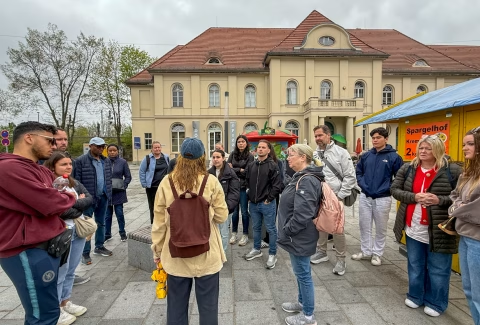
Our second venture was a classic Berlin walking tour centered on the city’s twentieth-century scars, tracking its incredible transition from wartime ruin to modern capital. We stood in awe before the remaining concrete sections of the Berlin Wall, exploring the haunting history of the division that defined a generation.
Erected overnight in August 1961 by the East German regime, this formidable barrier and its heavily guarded death strips physically and ideologically severed the city for 28 years. It stood as the ultimate symbol of Cold War division until its historic fall in 1989. Feeling the weight of a city once divided, we then marveled at the majestic, triumphant architecture of the nearby Brandenburg Gate, which famously transitioned from a symbol of exclusion to one of global German unity. To contrast the heavy history, we closed the day with a brilliantly fun visit to a Berlin ICEbar, sipping drinks out of glasses made entirely of ice.
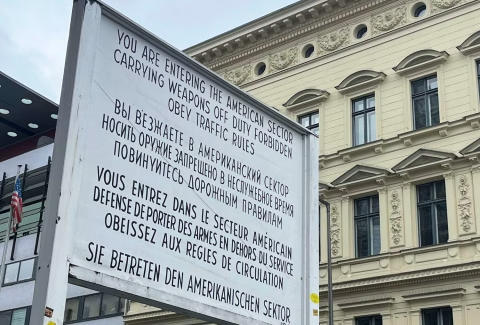
On our final full day, we embarked on our third historical tour. We stood at Checkpoint Charlie—the famous Cold War crossing point between the American and Soviet sectors—before walking through the labyrinth of the moving Jewish Memorial. We then visited the nondescript site of Hitler’s former bunker, where he committed suicide as WWII drew to a close. Rooster found this particular glimpse into the fall of the Third Reich both poignant and utterly fascinating.
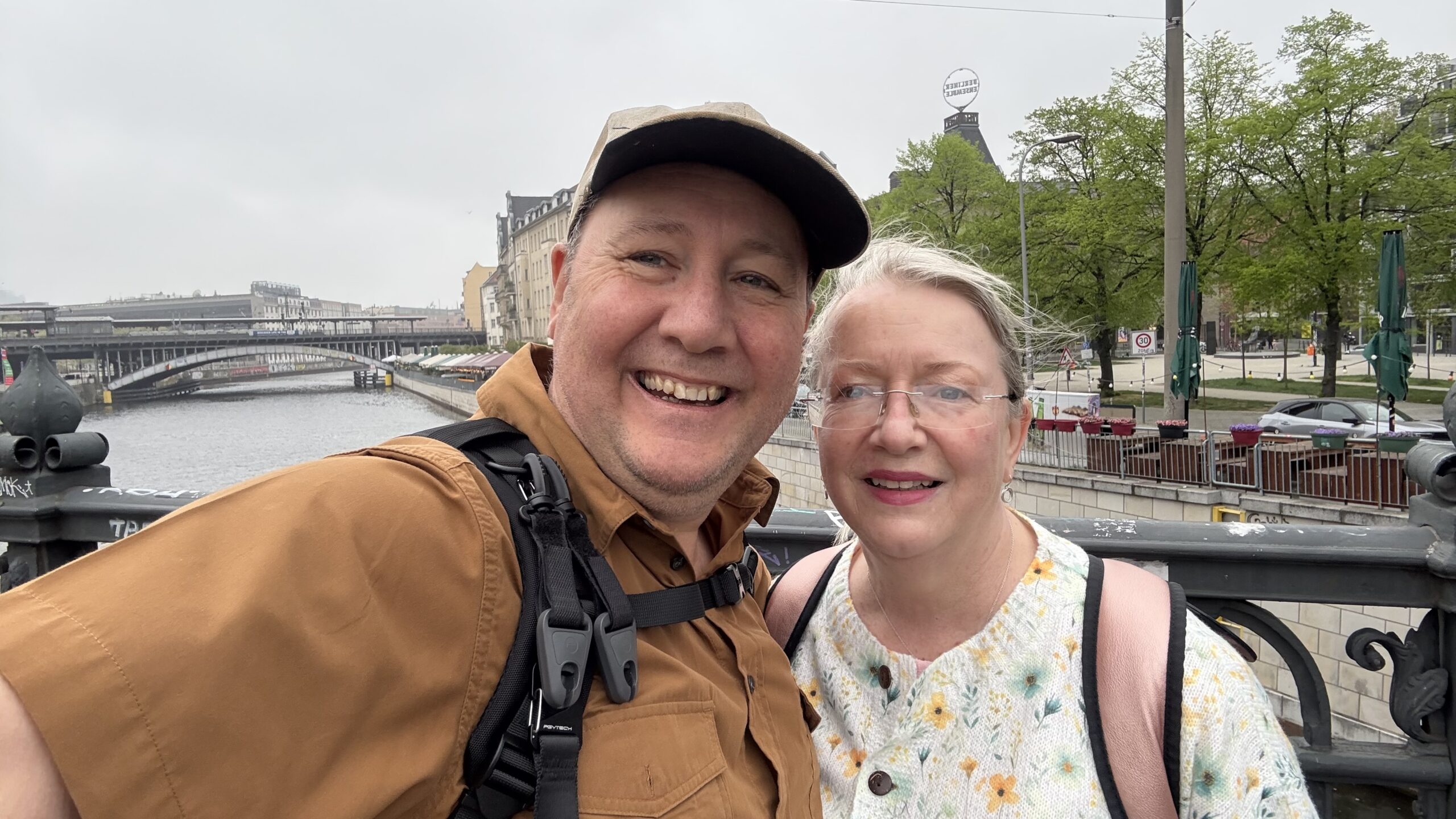
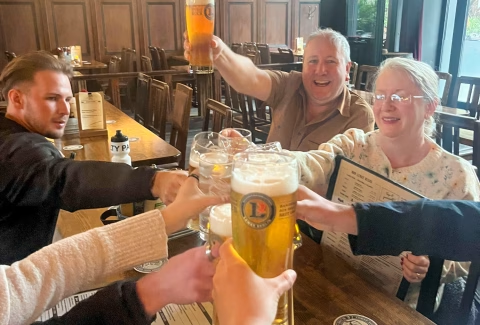
We closed our incredible short break by visiting a local park. We wandered through a bustling market, sat in the sunshine, chilled out, and, in true Rooster Clan fashion, raised yet another glass to an unforgettable trip.
Erected overnight in August 1961 by the East German regime, this formidable barrier and its heavily guarded death strips physically and ideologically severed the city for 28 years. It stood as the ultimate symbol of Cold War division until its historic fall in 1989. Feeling the weight of a city once divided, we then marveled at the majestic, triumphant architecture of the nearby Brandenburg Gate, which famously transitioned from a symbol of exclusion to one of global German unity. To contrast the heavy history, we closed the day with a brilliantly fun visit to a Berlin ICEbar, sipping drinks out of glasses made entirely of ice.
On our final full day, we embarked on our third historical tour. We stood at Checkpoint Charlie—the famous Cold War crossing point between the American and Soviet sectors—before walking through the labyrinth of the moving Jewish Memorial. We then visited the nondescript site of Hitler’s former bunker, where he committed suicide as WWII drew to a close. Rooster found this particular glimpse into the fall of the Third Reich both poignant and utterly fascinating.
We closed our incredible short break by visiting a local park. We wandered through a bustling market, sat in the sunshine, chilled out, and, in true Rooster Clan fashion, raised yet another glass to an unforgettable trip.