

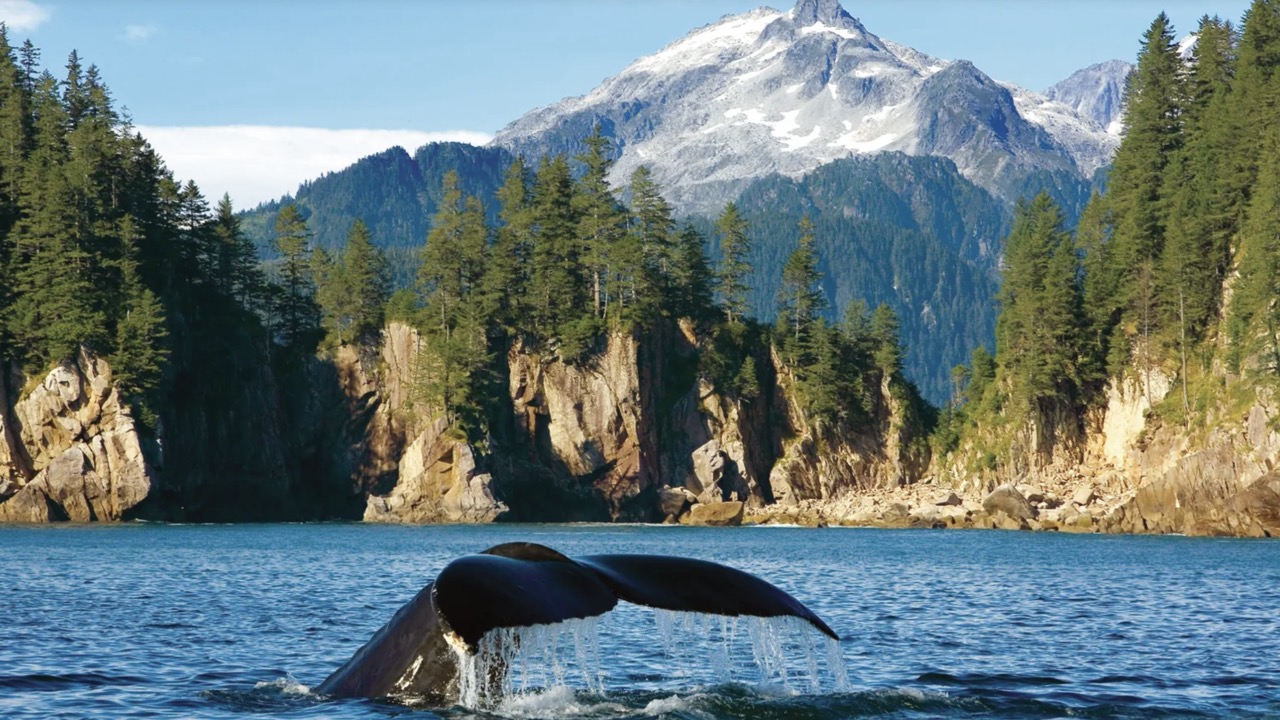
Hop aboard a catamaran and travel 120 miles into the pristine wilderness of Prince William Sound to view massive glaciers and get an up-close look at curious wildlife.
Stretch your legs on a short walk from the cruise ship terminal to your sightseeing vessel. From your catamaran, you’ll come face to face with towering masses of ice so close that you can hear the glaciers move. Gaze at their brilliant blue hues while you encounter several types of glaciers, including the alpine (hanging), piedmont and tidewater. It’s not uncommon to see glaciers calve (when pieces of ice break off into the water) during the cruise. To witness this massive movement of ice and hear its thunderous roar is truly an unforgettable experience.
Yet, with the bounty of glacial wonders, it’s not just about the ice. The wildlife is equally astounding. Enjoy sightings of sea otters, seals, porpoises, sea lions and bald eagles during the cruise. You may also spot bears, mountain goats and whales – both humpback and orca. At the end of the trip, we’ll stop at a bird rookery that is home to thousands of kittiwakes.
Narration by your experienced Captain and crew makes your trip is educational as well as scenic. Reserved seating, heated cabins, large panoramic windows offering excellent views from every seat, and a hot meal is served with tea, coffee, and ice water are all included. A snack bar, gift shop and restrooms are a few of the available amenities.
This adventure begins as soon as you leave Ketchikan’s picturesque harbor, passing colorful float planes and fishing boats en route to a wilderness experience you’ll never forget. Enjoy the service and narrative provided by your crew, and watch for marine and coastal wildlife as you “fly” at sea level past the rugged coastlines bordering Revillagigedo Channel.
Voyage into Behm Canal, surrounded by the pristine beauty of Misty Fjords. Along the way you’ll stop to view an active bald eagle’s nest, a Tlingit pictograph and New Eddystone Rock: an immense volcanic spire rising from the emerald sea. Delight in the unhurried exploration of Rudyerd Bay, an ice-carved masterpiece deep within the monument. Here, you’ll learn the natural history of the fjords, listen to the call of nesting seabirds, and feel the mist of glistening waterfalls.
Watch for seabirds that nest on rock faces sculpted by glacial forces and listen to their calls. On the cruise back to Ketchikan, enjoy a selection of snacks and beverages while watching for whales, seals, eagles and other of wildlife.
Size & Geography: British Columbia is the third-largest province of Canada by total area, with a size of approximately 944,735 square kilometers (364,764 sq mi). It is located in the westernmost part of the country, bordered by the province of Alberta to the east, the territories of Yukon and Northwest Territories to the north, the province of the Yukon to the northwest, the Pacific Ocean to the west, and the U.S. state of Alaska to the southeast.
Population: As of 2021, the estimated population of British Columbia is approximately 5.2 million people, with a population density of about 5.1 people per square kilometer (13.2 people per square mile).
British Columbia has a rich and diverse history, with evidence of human habitation dating back over 10,000 years. The province was first inhabited by indigenous peoples, including the Coast Salish, Haida, and Tlingit. In the 18th century, European explorers, including Captain James Cook and George Vancouver, arrived in the region. The British established a series of trading posts and forts, and in 1858, the Fraser Canyon Gold Rush brought a large influx of settlers. British Columbia joined Canada as the sixth province in 1871.
Vancouver, located in the southwestern corner of British Columbia, Canada, is a vibrant and diverse city surrounded by mountains and water. The city’s mild climate and stunning natural beauty make it a popular destination for outdoor enthusiasts, with activities such as hiking, skiing, and kayaking readily available. Vancouver’s scenic coastline offers breathtaking views of the ocean and surrounding islands, while its vibrant arts and culture scene features a wide range of museums, galleries, and performance venues.
The city’s food scene is equally impressive, with a diverse array of international cuisines and a thriving food truck culture. Visitors can explore the historic Gastown neighborhood, visit the famous Stanley Park, or take a stroll along the scenic seawall. Whether you’re interested in nature, culture, or cuisine, Vancouver has something for everyone.
Harrison Hot Springs is a village located in the Canadian province of British Columbia, within the Fraser Valley Regional District. The village is situated at the southern end of Harrison Lake, a large glacial lake that is a popular destination for boating, fishing, and other water sports. The village itself is a charming resort town with a range of accommodations, restaurants, and shops. Visitors can soak in the natural hot springs, explore the surrounding forests and lakes, or take part in a variety of outdoor activities such as hiking and birdwatching.
The area is also home to a number of cultural attractions, including the Harrison Hot Springs Museum and the Kilby Historic Site. The village hosts a range of events throughout the year, including the Harrison Festival of the Arts and the Harrison Music Festival.
Penticton is a city located in the Okanagan Valley of the Southern Interior of British Columbia, Canada. It is situated at the southern end of Okanagan Lake, and is known for its warm climate and natural beauty. The city has a population of around 33,000 people and is a popular destination for tourists and outdoor enthusiasts. Visitors can enjoy a range of activities such as hiking, biking, and water sports, as well as exploring the city’s many parks and gardens. Penticton is also home to a number of wineries and vineyards, making it a great destination for wine lovers.
The city has a rich history, with evidence of human habitation dating back over 10,000 years. The area was first settled by European colonizers in the mid-19th century, and the city was officially incorporated in 1908. Today, Penticton is a thriving community with a strong sense of identity and a deep connection to the natural world.
Kelowna is a city located in the Okanagan Valley of the Southern Interior of British Columbia, Canada. It is the largest city in the Okanagan Valley and is known for its natural beauty, with numerous lakes, parks, and vineyards in the surrounding area. Kelowna is a popular destination for outdoor enthusiasts, with opportunities for hiking, biking, skiing, and water sports. The city also has a thriving arts and culture scene, with numerous galleries, museums, and festivals throughout the year. Visitors can enjoy a range of activities, from wine tastings and hot air balloon rides to hiking and mountain biking in the nearby mountains.
The city has a strong economy, driven by the technology, healthcare, and tourism industries. Kelowna is also home to the University of British Columbia’s Okanagan campus, which adds to the city’s cultural and educational vibrancy.
Kamloops is a city located in the Thompson-Nicola region of British Columbia, Canada. The city is situated at the confluence of the North and South Thompson rivers and is known for its natural beauty, outdoor recreation opportunities, and rich cultural heritage. Visitors can explore the city’s many parks and trails, including the popular Riverside Park and the scenic trails of the North Thompson River. Kamloops is also home to a variety of museums and cultural attractions, including the Kamloops Museum and Archives and the BC Wildlife Park.
The city has a strong economy based on forestry, mining, and tourism, and is a popular destination for outdoor enthusiasts and nature lovers. With its mild climate and stunning natural scenery, Kamloops is an ideal destination for anyone looking to experience the best of British Columbia.
Whistler is a resort town in the Canadian province of British Columbia. Located in the Coast Mountains, 125 km (78 mi) north of Vancouver, Whistler is a popular destination for outdoor enthusiasts and a host to several major international sporting events, including the 2010 Winter Olympics. The town is known for its world-class skiing and snowboarding, as well as its scenic hiking and mountain biking trails in the summer.
Whistler Village, the main commercial area of the town, is a pedestrian-friendly hub with a variety of shops, restaurants, and accommodations. The village is surrounded by mountains and forests, offering breathtaking views and a range of outdoor activities.
Size & Geography: Alaska is the largest state in the United States by land area, covering approximately 663,300 square miles (1,717,856 km²). It is located in the northwest corner of North America, bordered by Canada to the east and the Arctic Ocean to the north.
Population: As of 2020, Alaska’s estimated population is around 739,795 people, with a population density of approximately 1.1 people per square mile (0.4 people per square kilometer).
Alaska has a rich and diverse history, with evidence of human habitation dating back over 10,000 years. The indigenous peoples of Alaska, including the Inupiat, Yupik, Aleut, and Athabascan, have a long history of trading and cultural exchange with other Native American groups. In the 18th century, Russian explorers and traders arrived in Alaska, followed by American explorers and traders in the early 19th century. In 1867, the United States purchased Alaska from Russia for $7.2 million, and it became an American territory in 1884. Alaska was admitted to the Union as the 49th state in 1959.

