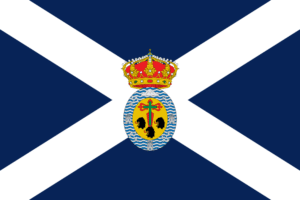


Tenerife is the largest and most populous of Spain’s Canary Islands, located in the Atlantic Ocean off the northwestern coast of Africa. Affectionately known as the “Island of Eternal Spring,” it is celebrated for its year-round mild subtropical climate.
The island’s dramatic topography is dominated by Mount Teide, a dormant volcano that stands as Spain’s highest peak () and forms the centerpiece of a UNESCO World Heritage National Park. Teide effectively splits Tenerife into two distinct microclimates: the lush, greener, and culturally traditional north, and the sun-drenched, arid south, which hosts vibrant coastal resort towns like Costa Adeje.
Tenerife’s diverse landscapes feature volcanic black-sand beaches, ancient laurel forests, and towering coastal cliffs like Los Gigantes. Originally inhabited by the indigenous Guanche people before Spanish conquest in the late 15th century, the island retains a rich cultural heritage, famously hosting one of the world’s largest annual carnivals in its capital, Santa Cruz. Today, while maintaining agricultural traditions in wine and banana cultivation, Tenerife thrives as a premier global tourism destination, attracting millions of visitors each year.
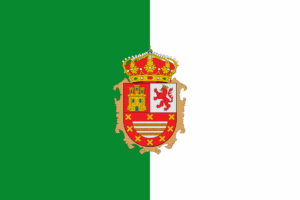
Fuerteventura is the second largest of Spain’s Canary Islands and the closest to the African coast, sitting just off the shore of North Africa. Geologically the oldest island in the archipelago, its terrain has been shaped by over 20 million years of erosion, resulting in distinct U-shaped valleys and low, rolling volcanic mountains rather than the jagged peaks found on neighboring islands.
The island is universally celebrated as the beach capital of the Canaries, boasting over of pristine coastline. Its unique climate is highly arid and windswept, featuring Europe’s largest desert and semi-desert landscapes. In the north, the massive, rolling white sand dunes of the Corralejo Natural Park create a striking Saharan aesthetic, while the south features the dramatic, wild shores of Cofete and the vast tidal lagoons of Sotavento. These consistent trade winds have made Fuerteventura a world-renowned mecca for windsurfing and kitesurfing.
Designated entirely as a UNESCO Biosphere Reserve, the island carefully balances tourism with heritage. Beyond its coastal resorts, the interior is dotted with traditional windmills, historic villages like Betancuria (the island’s original capital), and sacred indigenous sites like Tindaya Mountain.
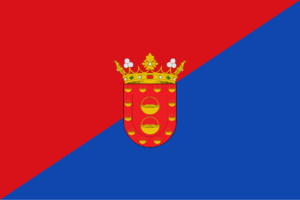
Lanzarote, the easternmost of Spain’s Canary Islands, is a striking destination defined by its dramatic, otherworldly geography. Located just 140 kilometers off the coast of North Africa, the entire island is designated as a UNESCO Biosphere Reserve, celebrating a delicate harmony between human life and raw nature.
The island’s visual identity was radically transformed by cataclysmic volcanic eruptions in the 18th century. This history is preserved within Timanfaya National Park, where the rugged Mountains of Fire feature vast fields of petrified lava and craters that mirror a lunar landscape. Alongside these stark badlands, Lanzarote features an extraordinary 213-kilometer coastline, shifting seamlessly from the wind-whipped cliffs of Famara to the tranquil, golden sands of Papagayo.
Beyond its natural wonders, the island’s culture is deeply tied to the vision of artist and architect César Manrique. He championed sustainable development, ensuring low-rise, whitewashed architecture that blends beautifully into the volcanic terrain. Blessed with a subtropical climate of “eternal spring,” Lanzarote pairs its unique aesthetic with ingenious local traditions, including crisp wines cultivated from vines grown inside hollowed-out rings of protective black volcanic ash.
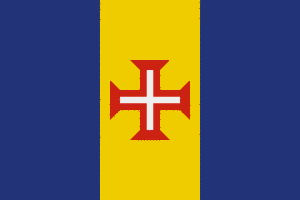
Madeira is a stunning volcanic archipelago located in the North Atlantic Ocean, operating as an autonomous region of Portugal. Situated roughly 500 kilometers west of the Moroccan coast, it beautifully blends European cultural sophistication with a dramatic, ruggedly subtropical ecosystem. The archipelago primarily consists of two main inhabited islands—the mountainous island of Madeira and the sandy-shored Porto Santo—alongside several pristine, uninhabited nature reserves.
Famed for its remarkably mild, year-round spring-like climate, the main island features an imposing terrain marked by towering sea cliffs, deep volcanic valleys, and distinct microclimates. It proudly protects the ancient Laurissilva forest, a dense, prehistoric laurel forest designated as a UNESCO World Heritage site. Instead of expansive white-sand beaches, Madeira attracts travelers with its dramatic black-sand coves and an incredible network of levadas—centuries-old irrigation channels that serve as world-class hiking trails.
The vibrant capital city, Funchal, serves as the region’s economic and cultural heartbeat. Globally, the island is celebrated for its unique fortified Madeira wine, intricate embroidery, and its most famous native son, Cristiano Ronaldo. Today, eco-tourism and outdoor adventures remain the primary engines of this unique island paradise.
La Palma, nicknamed La Isla Bonita (The Beautiful Island), is the most north-westerly of Spain’s Canary Islands. Defined by its dramatic volcanic geology, the entire island is a designated UNESCO Biosphere Reserve, celebrated for its raw, untamed natural beauty and steep terrain.
At its heart lies the Caldera de Taburiente, a massive depression surrounded by peaks reaching over 2,400 meters. The island’s southern landscape is younger and highly active, shaped by recent eruptions like Cumbre Vieja in 2021. In stark contrast to the barren, dark lava flows, the northern region is blanketed in lush, prehistoric laurel forests and deep green pine valleys.
Beyond its hiking trails, La Palma is a global hub for astronomy. Strict local light pollution laws have earned it recognition as a Starlight Reserve. The Roque de los Muchachos Observatory, perched above the cloud line, hosts some of the world’s most advanced telescopes.
With a relaxed capital, Santa Cruz de La Palma, known for its colonial architecture and wooden balconies, the island rejects mass tourism. Instead, it offers an authentic, eco-friendly haven focused on agriculture—primarily bananas—and sustainable exploration.
La Gomera is the second smallest of Spain’s main Canary Islands, spanning roughly 370 square kilometers off the coast of North Africa. Roughly circular in shape, this volcanic island features a dramatically rugged terrain characterized by deep, steep-walled ravines (barrancos) radiating outward from its center.
At the island’s heart lies its highest peak, Alto de Garajonay, standing at 1,487 meters. This mountainous highlands region traps trade wind moisture, creating a unique “horizontal rain” phenomenon that sustains Garajonay National Park. A protected UNESCO World Heritage Site, the park preserves a lush, prehistoric laurisilva (laurel cloud forest) that dates back to the Tertiary Period.
Historically significant, the capital of San Sebastián was Christopher Columbus’s final port of call in 1492 before he crossed the Atlantic. Culturally, La Gomera is famous for Silbo Gomero—a unique, pre-Hispanic whistling language developed by the native Guanches to communicate across deep, echoing valleys. Today, it stands as a UNESCO Intangible Cultural Heritage.
With a population of around 22,000, the island avoids mass tourism, drawing visitors instead for its 650 kilometers of hiking trails, black-sand beaches, and distinct local delicacies like almogrote (cheese spread) and miel de palma (palm syrup).