


Standing like a pair of sibling sentinels on the Peckforton Hills, Beeston and Peckforton present a striking contrast of genuine medieval history and grand Victorian imagination.
On one crag sits Beeston Castle, a rugged medieval stronghold built in the 1220s by Ranulf de Blondeville. Designed with a formidable inner ward but no central keep, its history spans Bronze Age settlement, Civil War sieges, and a legendary lost treasure hidden by King Richard II. It was partially dismantled in 1646 to prevent future military use, leaving behind the evocative, windswept ruins managed by English Heritage today.
Just a stone’s throw away on the neighboring wooded ridge lies Peckforton Castle. Despite its convincing, battle-ready appearance, Peckforton is a mock-medieval country house built between 1844 and 1851 for John Tollemache, a wealthy Cheshire landowner. Designed by Anthony Salvin in the style of a massive 13th-century border fortress, it represents the absolute peak of Gothic Revival architecture.
Today, while Beeston attracts hikers looking to step back in time and take in views stretching across eight counties, the beautifully preserved Peckforton Castle operates as a luxury hotel, wedding venue, and popular filming location. Together, they form one of the most visually dramatic landscapes in the Northwest.
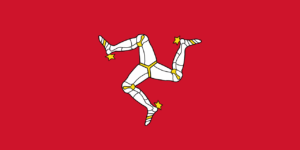
The Isle of Man is a self-governing British Crown Dependency located in the Irish Sea, roughly equidistant between England, Scotland, Ireland, and Wales. Though it relies on the United Kingdom for defense and foreign relations, it is not part of the UK or the British Overseas Territories. Instead, it boasts its own parliament, Tynwald, which has run continuously since 979 AD, making it the oldest continuous parliament in the world.
The island is widely famous for the **Isle of Man TT (Tourist Trophy)**, a legendary and high-risk motorcycle road race held annually since 1907 on closed public roads. Beyond the motorsport thrill, the island is characterized by its rugged coastline, sweeping moorlands, and deep glens. It holds a unique status as an entire nation designated as a **UNESCO Biosphere Reserve**, recognizing its commitment to preserving its rich natural landscapes and diverse wildlife.
Culturally, the island has deep Celtic and Norse roots, reflected in its folklore, historic castles like Peel and Ruslan, and the revival of its native language, Manx. Economically, it has evolved from traditional fishing and agriculture into a thriving modern hub for offshore banking, financial services, e-gaming, and aerospace engineering.
Situated in northwest England along the Mersey Estuary, Liverpool is a dynamic port city globally renowned for its exceptional cultural heritage, maritime history, and fierce sporting passion.
Historically operating as one of the world’s most critical global trading hubs, its iconic waterfront is anchored by the historic Royal Albert Dock—which features Britain’s largest collection of Grade I listed buildings—alongside the striking “Three Graces” skyline, prominently crowned by the legendary Royal Liver Building. Beyond its maritime legacy, Liverpool is celebrated worldwide as the birthplace of The Beatles, a distinction that centres its legendary live music scene around the historic Cavern Club and cements its designation as a UNESCO City of Music, complemented by housing the highest density of national museums and galleries in the United Kingdom outside of London.
The city lives and breathes football, serving as the proud home to two historic Premier League football clubs, Liverpool F.C. and Everton F.C., whose intense rivalry and passionate fanbases capture the energetic spirit of the region.
Driven today by robust tourism, thriving creative industries, and a bustling student population, contemporary Liverpool seamlessly blends its grand industrial past with a fiercely proud, welcoming modern identity, characterized by its warm, distinctively witty locals affectionately known across the globe as Scousers.