


Banner Left Graphic
February 2026

Indochina Tour

February 2026
Vietnam, Cambodia, Singapore
Banner Right Graphic

Destination Information

VIETNAM

VIETNAM

Vietnam is a Southeast Asian country known for its rich history, diverse culture, and stunning landscapes. Located on the eastern edge of the Indochina Peninsula, it stretches from the northern border with China to the southern tip at the Mekong Delta. The country’s capital is Hanoi, while its largest city is Ho Chi Minh City (formerly Saigon). Vietnam’s history is marked by centuries of foreign influence, including Chinese, French, and American colonialism, which have shaped its culture and identity.

Vietnam gained independence from France in 1954 after the First Indochina War, but its reunification was delayed by the Vietnam War (1955–1975), a conflict between communist North Vietnam, supported by the Soviet Union and China, and South Vietnam, backed by the United States. The war ended in 1975 with the fall of Saigon and the establishment of the Socialist Republic of Vietnam.

Today, Vietnam is a rapidly growing economy, driven by manufacturing, agriculture, and tourism. It has become known for its delicious cuisine, which includes dishes like pho and banh mi, and vibrant culture. The country is also renowned for its natural beauty, from the terraced rice fields in the north to the pristine beaches of the south. Despite its troubled past, Vietnam has emerged as a resilient, dynamic nation.
Hanoi

Hanoi, the vibrant and culturally rich capital of Vietnam, is a captivating metropolis where a thousand-year history seamlessly coexists with modern energy and rapid urban development. Situated along the banks of the historic Red River, the city serves as the political, intellectual, and cultural heartbeat of the nation, offering visitors an immersive journey into traditional Southeast Asian life.
At the core of the capital lies the legendary Old Quarter, a dense and bustling maze of narrow streets historically organized by trade guilds. This vibrant district is surrounded by elegant French colonial architecture, ancient Buddhist pagodas, and tranquil urban sanctuaries like Hoan Kiem Lake, where the iconic Ngoc Son Temple rests on a small islet.
Hanoi boasts several world-famous landmarks that draw travelers from across the globe. Chief among them is the historic Temple of Literature, established in 1070 as Vietnam’s first national university. Other unmissable cultural and historical sites include the solemn Ho Chi Minh Mausoleum in Ba Dinh Square, the unique lotus-shaped One Pillar Pagoda, the striking neo-Gothic St. Joseph’s Cathedral, and the poignant Hoa Lo Prison Museum.
Beyond its architectural heritage, Hanoi is globally celebrated for its exceptional culinary scene. The city is a haven for street food lovers, famous for iconic local staples like pho and bun cha enjoyed at bustling sidewalk stalls. Balancing slow-paced traditions—such as locals practicing morning tai chi by the water—with a dynamic contemporary pulse, Hanoi remains an unforgettable cultural gateway for anyone exploring Vietnam.

Ha Long Bay

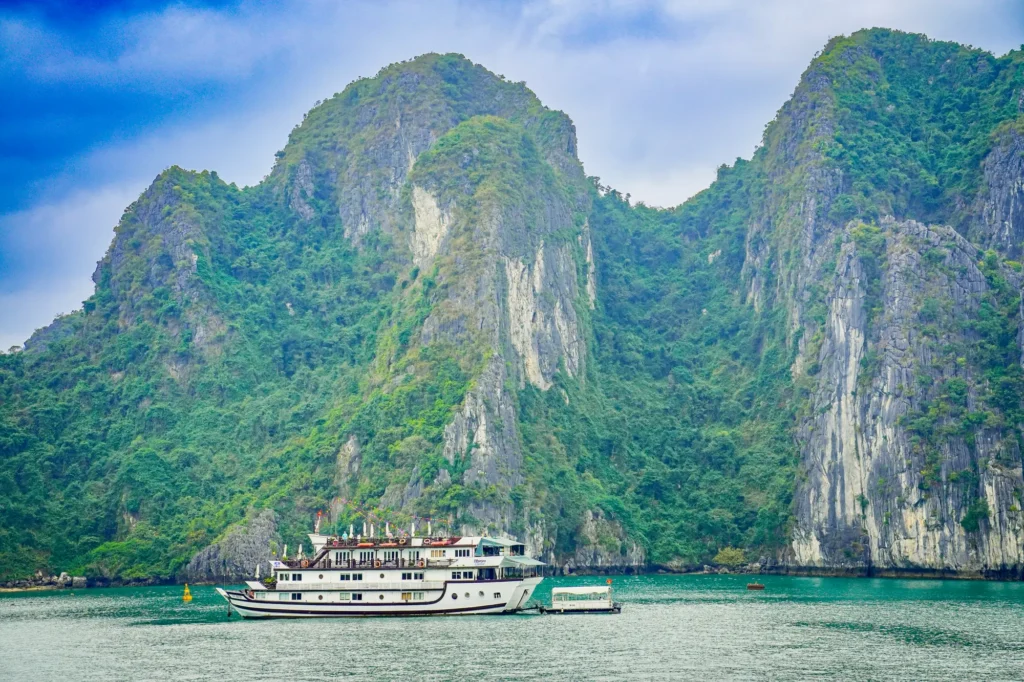
Ha Long Bay, located in northeastern Vietnam along the Gulf of Tonkin, is a breathtaking UNESCO World Heritage Site renowned for its surreal and iconic seascape.
Spanning roughly 1,500 square kilometers, the bay features nearly 2,000 limestone karst islands and islets that have been sculpted by hundreds of millions of years of coastal weathering and tectonic activity. These sheer, jungle-topped monoliths rise dramatically from calm, emerald-green waters, creating an intricate labyrinth of hidden caves, magnificent grottoes, and secluded white-sand lagoons.
According to local folklore, the name Ha Long translates to “descending dragon,” stemming from the legend that protective celestial dragons descended into the bay to spit out jade and pearls. These treasures transformed into the stone pillars, forming an impenetrable barrier to defend the local people against foreign invaders.
Today, Ha Long Bay stands as one of Southeast Asia’s premier natural wonders. It draws millions of international travelers who explore its majestic waters aboard traditional wooden junk boats and luxury overnight cruises. Visitors frequently immerse themselves in the landscape by kayaking through mysterious sea caves, hiking up panoramic island viewpoints, and visiting authentic floating fishing communities.

Hoi An

Nestled in central Vietnam, Hoi An is a remarkably preserved ancient trading port that thrived from the 15th to the 19th century. Designated as a UNESCO World Heritage Site, the town’s atmospheric Old Town showcases a unique architectural fusion, seamlessly blending traditional Vietnamese wooden houses, ornate Chinese assembly halls, Japanese merchant structures, and French colonial touches along narrow, pedestrian-friendly streets.

Famous for its iconic yellow shop houses, Hoi An truly enchants visitors at dusk when thousands of colourful silk lanterns illuminate the alleys and gently reflect off the Thu Bon River, particularly during the magical monthly full moon lantern festival. Beyond its rich heritage, the city is celebrated for its vibrant culinary scene—highlighted by regional specialties like savory Cao Lau noodles and white rose dumplings—as well as its legendary custom tailoring shops.

Visitors can also easily explore the surrounding countryside by bicycle, wandering through emerald-green rice paddies, visiting local artisan craft villages, or relaxing on the nearby pristine sandy shores of An Bang Beach. Combining deep historical significance with a welcoming, laid-back atmosphere, Hoi An remains one of Southeast Asia’s most captivating and unforgettable travel destinations for explorers of all kinds.

Da Nang

Positioned on Vietnam’s central coast, Da Nang is a dynamic and rapidly growing metropolis that perfectly balances modern urban energy with stunning natural beauty. Renowned for its miles of pristine white-sand coastline, such as My Khe Beach, the city serves as a major gateway to the region.

Da Nang is celebrated for its striking contemporary architecture, most notably the iconic Dragon Bridge, which famously breathes fire and water on weekend evenings. Nearby attractions include the mystical Marble Mountains filled with hidden caves, the verdant Son Tra Peninsula, and the breathtaking mountain resort of Ba Na Hills with its famous Golden Bridge. Combining coastal charm, rich cultural heritage, and proximity to historic landmarks, Da Nang is a vibrant hub for travellers.

Hue

Nestled along the banks of the Perfume River, Hue served as Vietnam’s imperial capital under the Nguyen Dynasty from 1802 until 1945. This historic city is best known for its grand architectural legacy, anchored by the massive, walled Imperial Citadel and the forbidden Purple City.
Scattered across the surrounding hillsides are the elaborate, serene royal tombs of the emperors, reflecting a unique blend of traditional Vietnamese aesthetics and French colonial influence. Beyond its royal monuments, Hue is widely celebrated as the spiritual and cultural heart of the country, dotted with ancient pagodas like Thien Mu.
The city also boasts a distinct culinary identity. Rooted in royal court traditions, local gastronomy features complex, beautifully presented dishes, most famously bún bò Huế, a rich and spicy beef noodle soup.

Ho Chi Minh City (Saigon)

Formerly known as Saigon, Ho Chi Minh City is Vietnam’s bustling economic powerhouse and largest metropolis.Situated along the Saigon River in the country’s south, it is a high-energy city where sleek skyscrapers stand shoulder-to-shoulder with French colonial landmarks and historic pagodas.

Key architectural and historical sites include the striking Saigon Central Post Office, the Independence Palace, and the poignant War Remnants Museum. Serving as the gateway to the nearby Cu Chi Tunnels and the Mekong Delta, the city is equally famous for its neon-lit nightlife, chaotic motorbike-filled streets, and vibrant open-air markets like Bến Thành.

Cu Chi

Located northwest of Ho Chi Minh City, the Cu Chi Tunnels represent a sprawling, underground network spanning over 250 kilometers. Dug out over decades during the Vietnam War, this intricate labyrinth served as a vital underground city for Viet Cong guerrillas, incorporating living quarters, field hospitals, command centers, and weapon cache storage.
Engineered with remarkable ingenuity, the tunnels featured concealed trapdoors, smoke-filtering systems, and multi-level depths to evade detection. Today, visiting this historic site offers a poignant glimpse into the resilience and wartime tactics of the era, allowing travelers to walk through preserved sections and understand this chapter of Vietnamese history.
CAMBODIA

CAMBODIA

Cambodia, located in Southeast Asia, is a country rich in cultural heritage and history. It is bordered by Thailand to the west, Laos to the north, Vietnam to the east, and the Gulf of Thailand to the southwest. The capital and largest city is Phnom Penh, while Siem Reap is famous for its proximity to the ancient Angkor Wat temple complex, one of the largest religious monuments in the world.

Cambodia’s history is deeply marked by the Khmer Empire, which ruled much of Southeast Asia from the 9th to the 15th centuries. The empire’s legacy is seen in the vast ruins of Angkor, which remain a UNESCO World Heritage site. However, Cambodia’s modern history is shadowed by the Khmer Rouge regime (1975–1979), which, under leader Pol Pot, led to the genocide of an estimated 1.7 million people, including intellectuals, ethnic minorities, and political opponents.

After the fall of the Khmer Rouge, Cambodia gradually rebuilt and has since made significant strides in terms of economic growth, though it remains one of the poorest nations in Asia. The economy is supported by agriculture, textiles, tourism, and manufacturing. Cambodia’s vibrant culture, which includes traditional dance, music, and cuisine, continues to thrive despite its tumultuous past.
Phnom Penh

Situated at the confluence of the Mekong, Tonle Sap, and Bassac rivers, Phnom Penh is the vibrant and rapidly developing capital of Cambodia. The city offers a poignant blend of ornate royal heritage, French colonial architecture, and a resilient spirit born from a complex history.
Key architectural landmarks include the magnificent Royal Palace and the gleaming Silver Pagoda. To understand the nation’s profound resilience, visitors look to the sobering historical sites of the Tuol Sleng Genocide Museum and the Choeung Ek Killing Fields. Today, Phnom Penh thrives as a bustling cultural and economic hub, featuring lively riverside promenades, bustling markets, and an increasingly dynamic culinary and café scene.

Siem Reap

Nestled in northwestern Cambodia, Siem Reap serves as the vibrant gateway to the magnificent archaeological wonders of the ancient Khmer Empire, most famously the iconic temple of Angkor Wat. Beyond its central masterpiece, the region is home to numerous breathtaking sacred sites.
Visitors explore the enigmatic, stone-faced towers of Bayon Temple within Angkor Thom, and the ethereal, jungle-entwined ruins of Ta Prohm, where massive tree roots wrap around ancient stonework. Additional highlights include the intricately carved, pink sandstone reliefs of Banteay Srei and the distant, jungle-shrouded pyramid of Koh Ker. Blending world-class archaeological treasures with a lively modern town, Siem Reap offers an unforgettable historical journey.
SINGAPORE

SINGAPORE

Singapore is a small but highly developed island nation in Southeast Asia, located at the southern tip of the Malay Peninsula. Despite its limited natural resources and small land area, Singapore has grown into one of the world’s leading financial, trade, and transportation hubs. It became an independent republic in 1965 after separating from Malaysia and, under the leadership of its first Prime Minister, Lee Kuan Yew, rapidly transformed from a developing country into a global economic powerhouse.

Known for its political stability, low crime rate, and efficient governance, Singapore consistently ranks high in global competitiveness, education, and quality of life. The city-state is celebrated for its modern skyline, clean streets, and green urban planning, including landmarks like Marina Bay Sands, Gardens by the Bay, and Sentosa Island.

Singapore is also a multicultural society, with major ethnic groups including Chinese, Malay, Indian, and Eurasian communities. This diversity is reflected in its food, festivals, and languages, with English, Mandarin, Malay, and Tamil as official languages. Its strategic location, business-friendly environment, and world-class infrastructure attract international investors, tourists, and talent. Singapore continues to play a significant role in regional and global affairs as a model of development, innovation, and social harmony.

Step into an immersive experience with our interactive 360° view. Unlike standard photos, this full panoramic view puts you right inside the scene. Navigation is effortless: click and drag your mouse—or swipe on mobile—to pan smoothly in any direction and explore the entire environment from every angle at your own pace.

13th November

Hellocjncwejnewj WL w wckjhwe ckhjwe check cewkjc ewjgc we knew c;KT cwe;kc

Kwnefjnwejf wejf weihd wekcj we knew cwe;KCC ewkcj we knew ck;WL cw;KCC w;k

Hellocjncwejnewj WL w wckjhwe ckhjwe check cewkjc ewjgc we knew c;KT cwe;kc

13th November

Kwnefjnwejf wejf weihd wekcj we knew cwe;KCC ewkcj we knew ck;WL cw;KCC w;k

13th November